Key Takeaways
- Waiting for the “perfect” solution is a costly decision. Organizations that move forward, even imperfectly, are pulling ahead of those still waiting for certainty.
- Maritime decarbonization has moved from “if” to “how.” With real-world examples of emissions reductions and cost savings already being achieved across ports and vessel operators, the conversation has shifted from proving viability to sequencing the right actions.
- A two-phase approach works best. Near-term bridging solutions like renewable fuels can extend the life of existing assets, while deliberate planning for future infrastructure, such as electrification, builds runway for funding, risk management, and community buy-in.
- Strong coordination outperforms technology alone. The biggest gains are coming from organizations that invest in relationships, shared data protocols, and clear decision-making. Technology works best when it amplifies coordination that’s already working, not as a substitute for it.
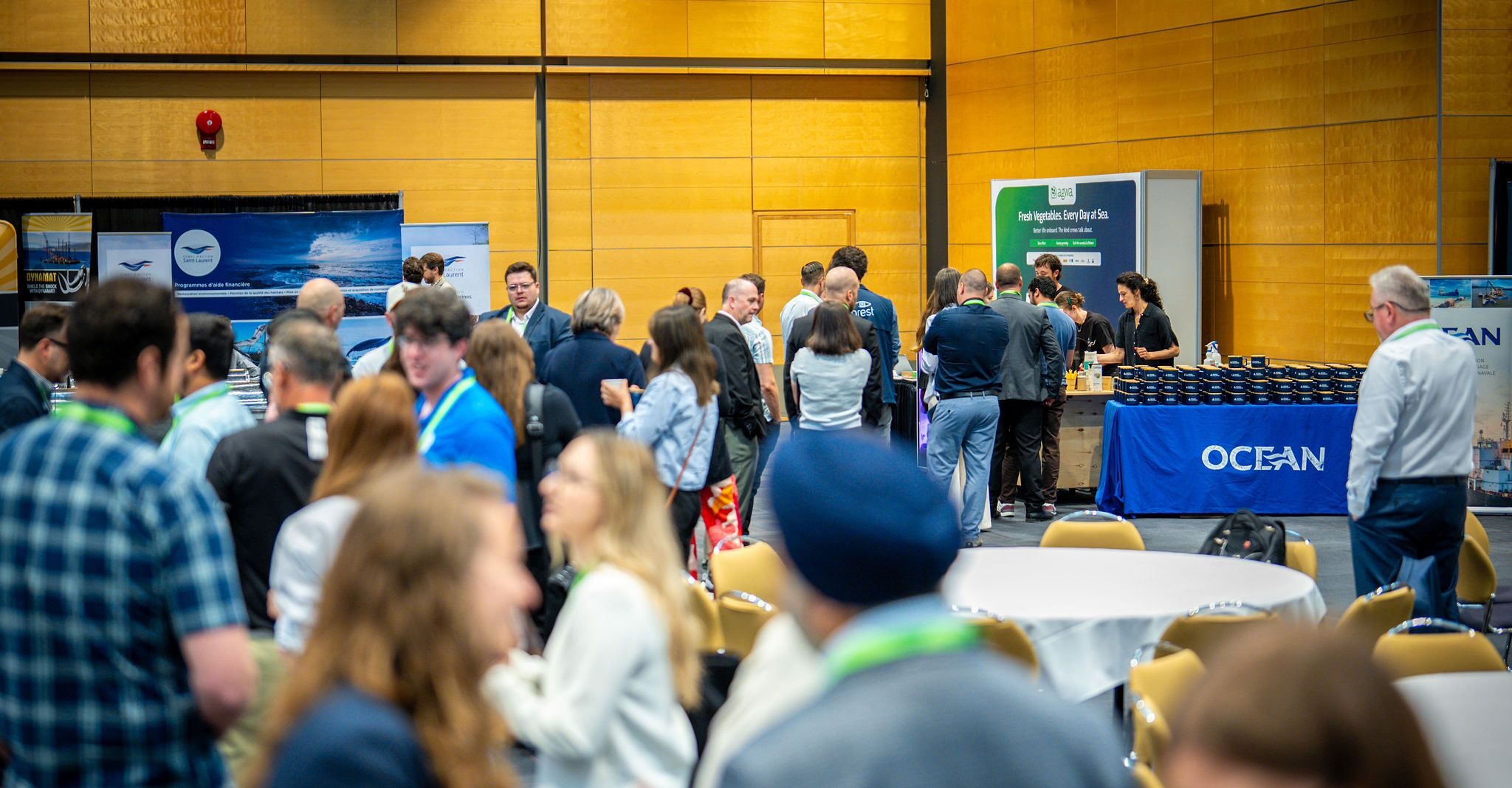
Decarbonization in the maritime sector is happening now. This was the main message from Greentech 2026, and we’re excited to see the outcomes.
Our Technical Lead Kyle Bouwknecht returned from the conference energized and with one quote that captures the urgency of the moment: “A delayed decision is not necessarily a decision of quality.”
That line resonated throughout a conference of port operators, harbour authorities, vessel owners, and terminal managers as the realization that the temptation to wait for the “perfect” solution might be costing the maritime industry years it can’t afford to lose. The organizations moving forward, even imperfectly, are the ones pulling ahead.
The Industry Has Proven It Can Decarbonize
One of the most striking things about Greentech 2026 was the number of examples of real decarbonization in action. Ports, container terminals, harbour authorities, and vessel operators were sharing what they’ve already done, the emissions reductions achieved, the fuel costs cut, and the improvements in overall operations.
The conversation of decarbonization has matured, and the sector is past the phase of debating whether maritime decarbonization is viable. The question that arises now is: what’s the smartest sequence of actions for your specific operation?
Every port, terminal, and fleet has a different asset base, operating context, and end-of-life timeline for its existing infrastructure. While there is no one-size-fits-all solution, there are methods and actions that have been successfully deployed and have already led to decarbonization.
Optimize What You Have. Plan for What Comes Next.
The most practically useful theme from Greentech was a two-phase approach that leading operators are already taking.
Phase One: Use bridging solutions to get the most out of your existing assets until they reach end-of-life. For vessel operators, this could look like data-driven scheduling and route optimization, hull treatments and reforming, and electrification at berth. For ports, terminals, and harbours, this could be renewable fuels for landside fleets or staff awareness and training programs.
Phase Two: Plan deliberately for your future fleet or infrastructure. Explore options for electrification, alternative fuels, and shore power. Ports can plan for flexible future infrastructure that will enable them to serve as energy hubs for both marine and landside tenants. Planning for this now creates greater runway for managing risk, accessing funding, and gaining community buy-in.
This is exactly how Synergy works with our marine and port clients. We start with a rigorous GHG assessment to understand where emissions come from, then build a decarbonization roadmap that sequences practical near-term wins alongside longer-term transformation. We’ve done this with clients ranging from the Greater Victoria Harbour Authority to Port Miami to Port Vancouver, and we see the same outcome: the organizations that start first, even imperfectly, end up in a far stronger position than those who wait.
Electrification and Renewable Fuels Are Leading the Way
For ports and terminals specifically, the decarbonization story is increasingly being written by two technologies: electrification and renewable fuels.
Shore power, allowing vessels to plug into the grid while at berth rather than running their engines, is one of the most impactful interventions a port can make, both for its own emissions footprint and for the vessels it serves. Though this might not always have been the case, the economics have shifted. The infrastructure is increasingly well understood, and in some regions, government funding may be available.
Renewable fuels are enabling vessel operators to reduce emissions from existing engines and fuel systems, serving as a critical bridge while the sector works through longer-term transitions to electrification or other alternative fuels.
Both pathways require serious feasibility analysis and cost modelling to implement well. That work is worth starting before regulatory pressure or investor scrutiny forces the timeline.
Coordination & Communication
There was enthusiasm at Greentech around AI-powered optimization for ports and vessel operations. While it is a space worth watching, the most grounded voices made the point that good communication between port operators, terminal managers, vessel operators, and logistics coordinators will almost always outperform a software solution built on top of broken coordination.
Technology works best when it’s used to amplify what’s already working. The maritime organizations making the most progress on decarbonization are the ones that have invested in relationships, shared data protocols, and have a clear decision-making structure first.
The Cost of Waiting
This ties back to the quote Kyle mentioned: “A delayed decision is not necessarily a decision of quality.”
The regulatory environment is tightening with IMO targets, Canadian port authority reporting requirements, investor ESG pressure, and supply chain partners all requiring emissions data and a decarbonization plan. The organizations that come out ahead will be the ones building this capacity proactively.
If you’re a port operator, harbour authority, marine operator, or terminal manager thinking about where to begin, or how to accelerate progress you’ve already made, we’d love to talk. Synergy’s maritime services exist to help organizations like yours turn that first step into lasting momentum.