Client Name
Capital City Paving
Industry
Construction
Location
Southern Vancouver Island
Client Size
Medium
Website
Services Offered
- Comparative Lifecycle Emissions Analysis
Challenge
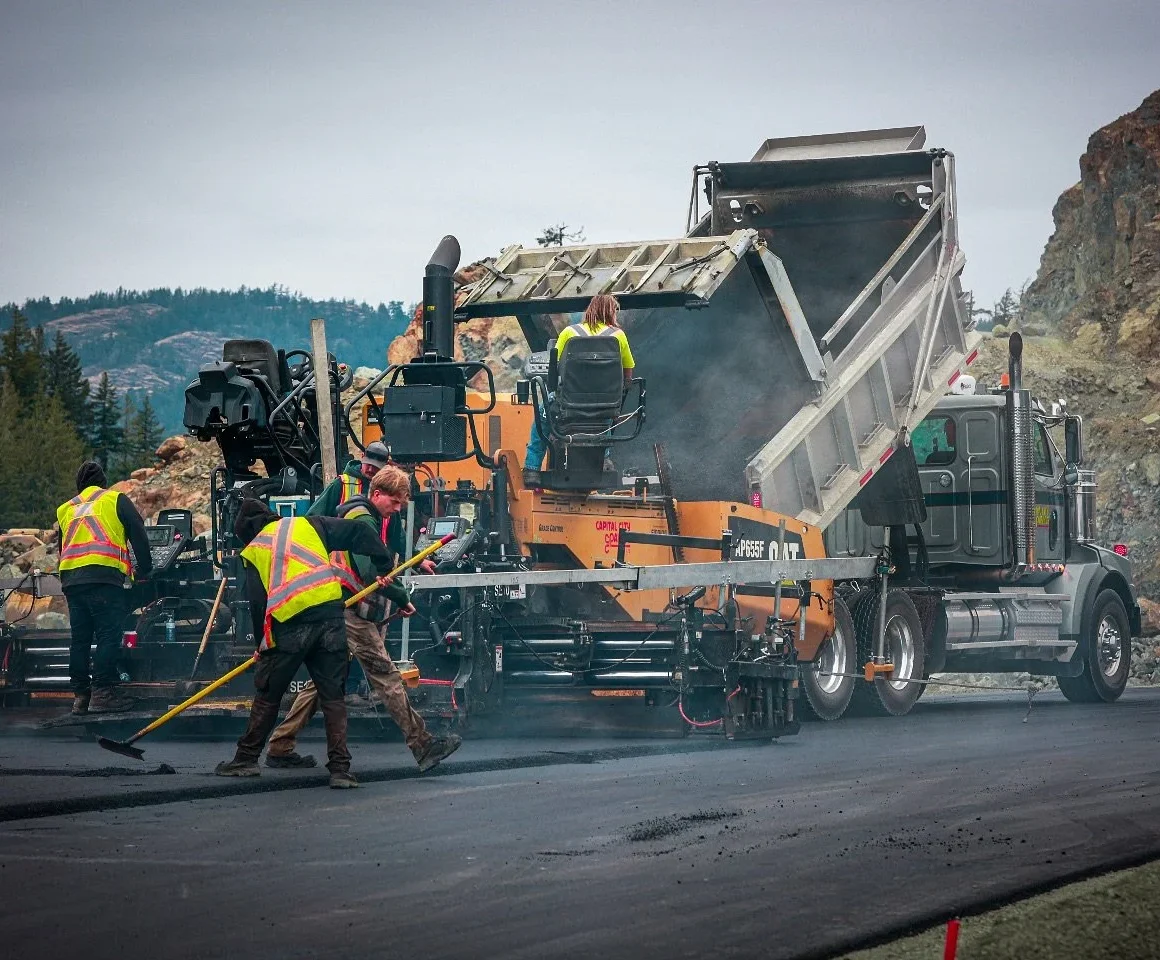
Capital City Paving Ltd. is a locally owned paving company serving Greater Victoria and South Vancouver Island, specializing in asphalt production, paving services, and pavement rehabilitation.
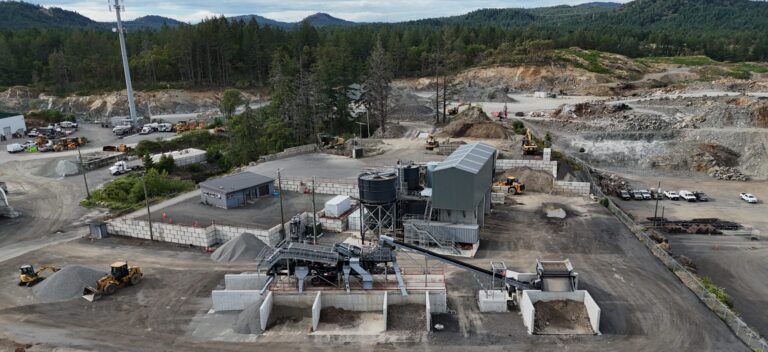
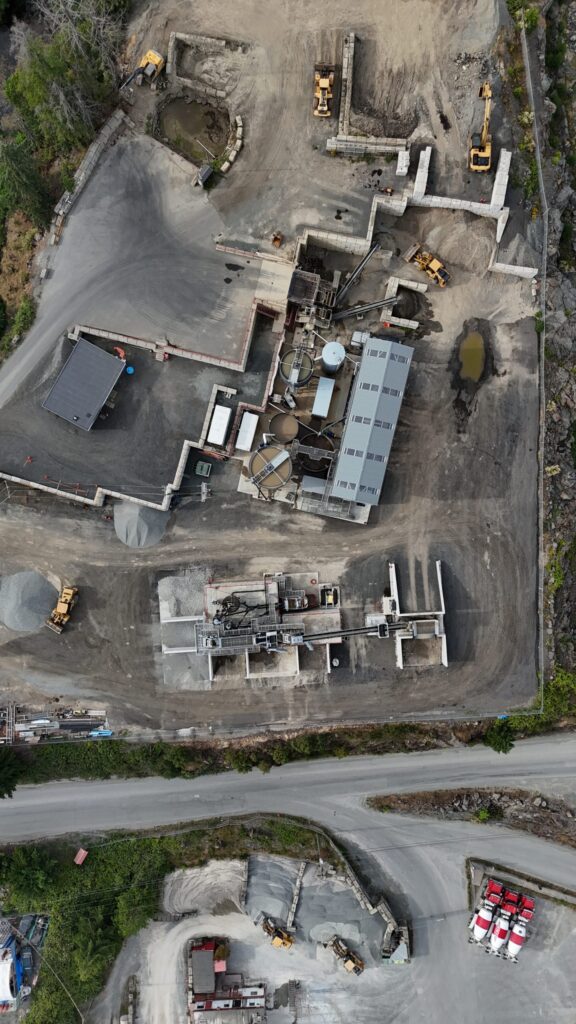
Capital City Paving is committed to reducing its environmental impact, and has implemented a new solution to dealing with waste aggregate. In a typical paving project, old road base needs to be removed and transported to a landfill, then replaced with new aggregate that has been harvested and processed from a rock quarry. To avoid excessive waste and the need for raw materials, Capital City Paving has implemented a new method of Repurposing Aggregate. Rather than disposing of the old road base material and underlying fill soil, Capital City Paving began processing it using an advanced aggregate washing system, Terex AggWash, to produce clean, commercially viable repurposed aggregate.
Capital City Paving knew this approach was better for the environment than conventional quarrying, but wanted to analyze and quantify the benefits of their new process.
Project Objectives
- Provide a clear single-use case example to demonstrate practical, replicable environmental benefits of the new system, repurposing aggregate.
- Quantify the greenhouse gas (GHG) emissions associated with producing recycled aggregate using Capital City Paving’s Terex AggWash (aggregate washing) process.
- Quantify the GHG emissions associated with producing an equivalent volume of virgin quarried aggregate for the equivalent single-use case.
- Compare the emissions profiles of recycled and virgin aggregate production to demonstrate the environmental benefits of aggregate repurposing in a practical, real-world use case.
Synergy’s Solution
Synergy conducted a cradle-to-gate comparative lifecycle emissions analysis, essentially two parallel LCAs calculated on a consistent basis, to determine the difference in emissions between Repurposed Aggregate and an equivalent quarried aggregate scenario.
Key emission sources assessed across both scenarios included:
- Transportation: Diesel fuel used to transport waste soil to the facility and respective byproducts to the fill site
- Drilling & Blasting: Diesel fuel and explosives used to extract rock from the quarry
- Crushing & Sorting: Diesel and electricity used in machinery to crush and size aggregate
- Hydrovac Processing: Emissions from electricity generation used to run machinery
- Aggwash Processing: Emissions from electricity generation used to run machinery
- Material Handling & Stockpiling: Diesel-powered equipment used to move and store materials
Synergy used annual totals to calculate emissions on a per-tonne-of-saleable-product basis, creating a consistent and reliable functional unit for comparison.
Defining the Right Comparison
In a typical quarried aggregate LCA, waste soil disposal wouldn’t be included as it isn’t part of the product’s conventional lifecycle. But in Capital City Paving’s context, waste soil is the raw material that makes Repurposed Aggregate possible, and the disposal of that soil (when it isn’t repurposed) is an emission source that needs to be accounted for.
This means the quarried aggregate results from this analysis are specific to this use case and cannot be used in isolation, as they are intended to support a like-for-like comparison.
The Results
Synergy ran emissions calculations for the two scenarios and found that Repurposed Aggregate generates 10.18 kgCO₂e per tonne of saleable product, compared to 23.42 kgCO₂e for the equivalent quarried aggregate scenario. That’s a 57% reduction in emissions intensity.
Drilling, blasting, crushing, and sorting together account for a large portion of the emissions of quarried rock, but the largest single contributor to the quarried aggregate’s footprint is transportation, specifically, moving waste soil out to a disposal site in Duncan. In the quarried aggregate scenario, nearly 80% of total emissions occur during the distribution and storage phase, with transport accounting for the majority.
By processing waste material on-site at Millstream instead, Capital City Paving reduces the volume of material sent to disposal by 75% per tonne of input, and with it, the associated transportation emissions. The Aggwash system itself is electric and contributes less than 1% of Repurposed Aggregate’s total emissions.
If this were theoretically scaled across Capital City Paving’s 2025 operations, 69,000 tonnes of waste material were delivered to the Millstream facility – approximately 914 tCO₂e in avoided emissions annually.
In addition to emissions reductions, this new process supports other sustainability and project objectives:
- Reduce Waste & Landfill Use: Recovers reusable sand, stone & aggregates from mixed material streams, significantly cutting landfill volumes.
- Lower Project Costs: Locally processed recycled aggregates reduce hauling, purchasing, and disposal costs, delivering immediate value to public & private projects.
- High-Quality Materials: Produces consistent, clean aggregates suitable for roadbuilding, utility work, asphalt, concrete, and landscaping applications.
- Supports Municipal Sustainability Goals: By reusing materials and reducing demand for virgin aggregates, we help communities lower carbon footprints and meet green procurement targets.
Long-term Impact
Capital City Paving can now bring this analysis to municipal clients and RFP processes as documented evidence that their Repurposed Aggregate is a lower-carbon alternative to conventional aggregate supply. Beyond marketing, the results also support a broader business case for increasing operational sustainability. Diverting material from landfill, reducing the need for raw materials, and cutting emissions improve an organization’s reputation and set companies apart from competitors.
For the City of Victoria and other regional municipalities, this case is increasingly compelling. The more waste material Capital City Paving can process locally, the less that needs to be transported to a fill site, and the less new rock needs to be extracted elsewhere.
Key Takeaways
Comparative Analysis Vs Standard LCA
By calculating two parallel scenarios, Capital City Paving didn’t just determine their emissions intensity, but also how and why it differs from the alternative. This means Capital City Paving doesn’t just have emissions quantification for their projects, but also a comparison showing the impact of their new method.
You Don’t Know Until You Know
Before this analysis, it was unclear where the main benefit of Repurposed Aggregate was. Quarrying activities were suspected to have the greatest impact, but the data revealed that the main emission source in the alternative scenario was transportation, specifically the emissions from hauling fill soil to a disposal site. The key takeaway is that without this project, Capital City Paving couldn’t quantify the benefits of its new system or identify the source of the real savings. This is why projects like this are important: even if you know your product is a better alternative, without data-backed analysis, you can’t fully demonstrate the environmental advantage or understand where the real impacts occur.
This project demonstrates how a well-structured comparative lifecycle analysis can validate a product’s environmental credentials, help companies communicate them with confidence, and reveal where those benefits actually come from.
If your organization is ready to understand the emissions profile of your products or processes, contact us to get started.