
Key Takeaways
- Regenerative tourism goes beyond sustainability by actively restoring ecosystems, strengthening communities, and creating transformative travel experiences.
- Adventure Canada demonstrates regenerative principles through low‑waste operations, thoughtful sourcing, and community‑led cultural exchanges.
- Creating safe, judgment‑free spaces for climate conversations empowers people to ask questions, learn, and take meaningful action.
- Both organizations and individuals make the most progress by starting small, staying curious, and building change step by step.
- The journey toward sustainability is ongoing, and meaningful impact grows when people feel supported, informed, and encouraged to begin.
Lessons Learned from an Eye-Opening Trip to Newfoundland with Adventure Canada
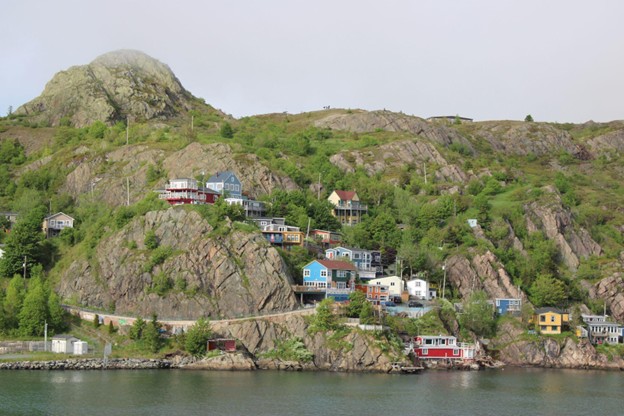
Beyond Sustainability: Understanding Regenerative Tourism
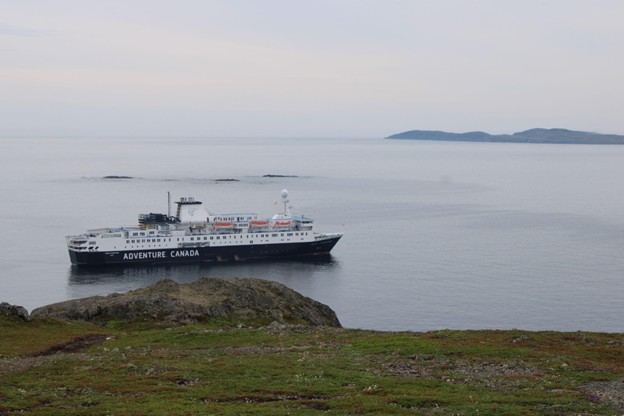
Embracing Regenerative Tourism with Adventure Canada
Environmental Practices:
- Virtually no plastic or single-use items aboard the vessel
- Comprehensive food waste reduction through careful meal planning, organized storage, and minimizing buffet-style service
- Sustainable hotel operation best practices, including eco-friendly cleaning products and guest-requested (rather than automatic) towel and linen changes
- Local and sustainable purchasing decisions, from food procurement to the items available in the on-board gift shop
Community-Centered Experiences:
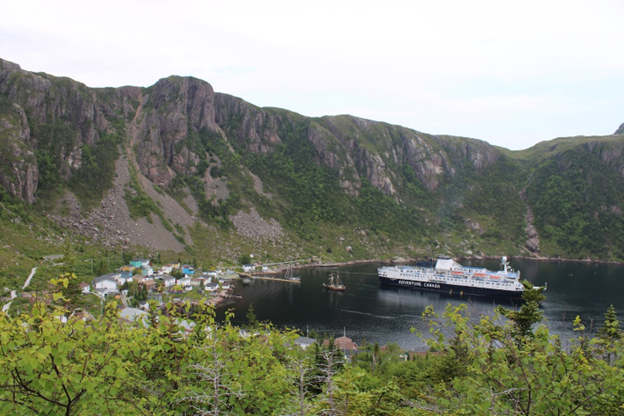
What truly exemplifies regenerative tourism is how Adventure Canada approaches community visits. A highlight of Arctica’s journey was visiting François, a remote community accessible only by boat. Adventure Canada has partnered with François for annual visits and through collaboration have create space for authentic cultural exchange. During this trip, community members hosted a kitchen party with live music and shared traditional fish cakes with guests.
This is regenerative tourism at its core: the community leads the experience, ensuring their culture and needs remain central. The economic benefits stay local, relationships deepen year after year, and travelers leave transformed by genuine human connection.
Engaging and Educating on Regenerative Practices
- How do I measure my personal carbon footprint and the footprint of my community organization?
- What does 1 tonne of carbon really mean?
- How impactful is flying compared to other transportation methods?
- I am concerned about the impact of EV manufacturing. Are they really a good solution?
- What does the push to electrification mean for my home province’s (Ontario in this case) energy grid?
- What are the most impactful ways to lower my carbon footprint?
- What about other environmental impacts, like air quality issues or water degradation, unrelated to GHG emissions?
- Are emissions of beef really that bad?
- Does purchasing locally reduce food emissions?
The engagement was so high that Arctica was invited back for a second session focused on sustainable food systems, highlighting how food waste is one of the largest contributors to greenhouse gas emissions, yet is one of the most addressable issues we face.
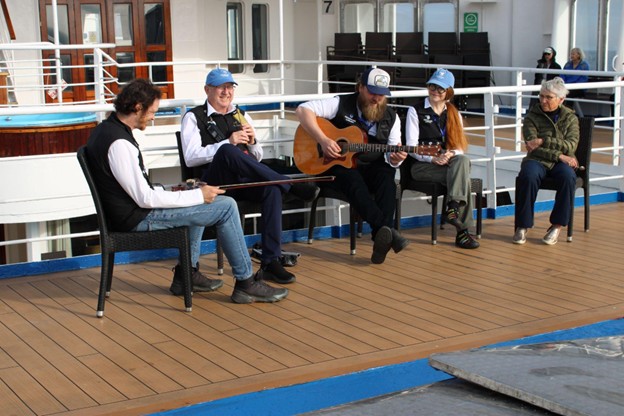
Throughout the rest of the voyage, passengers approached her with more questions, shared their own sustainability challenges, and began having these conversations with each other. Many shared that they have been wondering these things for a long time, but didn’t know how to ask the questions or where to go for information. What started with one hesitant question transformed into an ongoing, collaborative dialogue about how each person could adapt and change.
Starting Small, Building Big: Two Parallel Journeys
Reflecting on this experience, Arctica realized she was witnessing two parallel journeys of transformation, both beginning with the courage to start small.
Adventure Canada’s journey didn’t begin with a fully formed regenerative tourism model. Over the years we’ve worked together, they’ve assessed their practices thoughtfully, asked difficult questions, experimented with solutions, and grown step by step. Since Arctica’s trip, they’ve continued expanding their initiatives, always focusing on what’s feasible and impactful for their specific context. They have built an organization increasingly centered on community partnership, decarbonization, and creating space for education.
The passengers’ journey began with someone willing to ask a small question, which created space for others to be curious too. One question became many. Individual concerns became collaborative discussions. Fear of judgment transformed into eagerness to learn.
Both journeys illustrate that meaningful change doesn’t require having all the answers from the start. It requires curiosity, willingness to begin, and critical thinking.
Finding the Best Solution for YOU
You don’t need to implement a perfect sustainability plan tomorrow. You don’t need to have all the answers. You just need to:
- Ask questions – Even the ones that feel basic
- Create safe spaces for dialogue – Where uncertainty and learning are welcomed, not judged
- Start small – Choose one meaningful action and build from there
- Think critically – Not every “sustainable” solution is universally perfect; what matters is finding what’s feasible and impactful for you
Whether you’re an individual trying to reduce your carbon footprint, a community organization taking your first steps toward sustainability, or a business ready to embrace regenerative practices, the principles remain the same. Progress happens when we create space for honest conversation, embrace curiosity over perfection, and recognize that every journey begins with a single step, or a single question.
Conclusion
If you’re ready to take meaningful steps toward sustainability, contact us to start your journey.